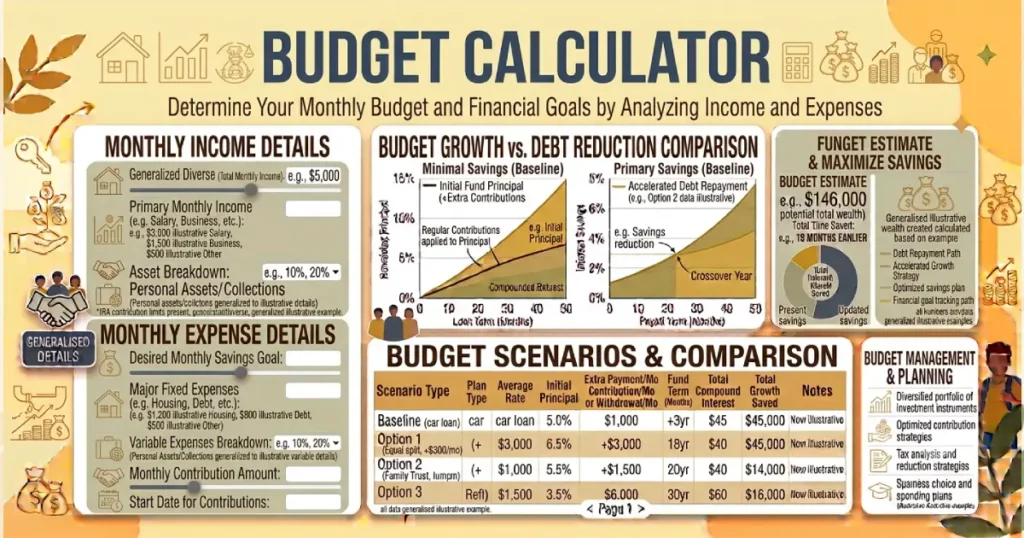
A budget calculator helps you understand where your money goes each month by comparing your income with your expenses. Whether you're creating your first budget or adjusting an existing one, the calculator provides a simple way to estimate your monthly cash flow, identify spending patterns, and determine how much you can save.
How a Budget Calculator Works
A budget calculator organizes your finances by subtracting your monthly expenses from your monthly income. The result shows whether you have money left to save, need to reduce spending, or should adjust your financial goals.
Most calculators estimate:
- Monthly budget
- Total monthly income
- Total monthly expenses
- Available savings
- Remaining discretionary income
- Income-to-expense ratio
The calculator works best when you include both fixed and variable expenses to create a realistic picture of your finances.
What Information Do You Need?
| Input | Description |
|---|---|
| Monthly income | Your after-tax income from employment, self-employment, or other sources. |
| Housing expenses | Rent or mortgage payments, property taxes, insurance, and HOA fees. |
| Utilities | Electricity, water, gas, internet, and phone bills. |
| Transportation | Car payments, fuel, maintenance, insurance, and public transit. |
| Food expenses | Groceries, dining out, and household supplies. |
| Debt payments | Credit cards, student loans, personal loans, and other recurring debt. |
| Savings and investments | Retirement contributions, emergency savings, and investment deposits. |
| Other expenses | Entertainment, subscriptions, childcare, healthcare, and miscellaneous spending. |
Why Use a Budget Calculator?
A budget planner makes it easier to understand your financial habits and make informed spending decisions.
- Track monthly income and expenses.
- Identify unnecessary spending.
- Estimate how much you can save each month.
- Create realistic financial goals.
- Prepare for large purchases.
- Reduce financial stress through better planning.
Even small adjustments to recurring expenses can have a meaningful impact over time.
Common Budget Categories
| Category | Examples |
|---|---|
| Housing | Rent, mortgage, insurance, property taxes, maintenance. |
| Transportation | Car payment, gas, repairs, insurance, transit passes. |
| Food | Groceries, restaurants, coffee, meal delivery. |
| Utilities | Electricity, water, internet, mobile phone. |
| Healthcare | Insurance premiums, prescriptions, medical bills. |
| Debt | Credit cards, student loans, personal loans. |
| Savings | Emergency fund, retirement, investments. |
| Personal | Entertainment, clothing, travel, hobbies. |
The 50/30/20 Budget Rule
One of the most popular budgeting methods is the 50/30/20 budget rule. It divides your after-tax income into three broad categories.
| Category | Suggested Share |
|---|---|
| Needs | 50% |
| Wants | 30% |
| Savings and debt repayment | 20% |
This guideline can provide a starting point, but your ideal budget depends on your income, location, financial goals, and living expenses.
Fixed vs Variable Expenses
| Fixed Expenses | Variable Expenses |
|---|---|
| Rent or mortgage | Groceries |
| Insurance premiums | Dining out |
| Loan payments | Entertainment |
| Subscription services | Shopping |
| Property taxes | Travel |
Variable expenses often provide the greatest opportunity to reduce spending without changing long-term financial commitments.
How to Build a Better Monthly Budget
- Calculate your average monthly take-home pay.
- Track every recurring expense.
- Estimate irregular expenses throughout the year.
- Set realistic savings goals.
- Review your spending each month.
- Adjust your budget as income or expenses change.
A monthly budget calculator makes these adjustments easier by showing how changes affect your overall financial picture.
How to Increase Your Monthly Savings
If your budget shows little money remaining each month, consider:
- Reducing discretionary spending.
- Paying off high-interest debt.
- Negotiating recurring bills.
- Automating savings contributions.
- Building an emergency fund before increasing discretionary spending.
- Reviewing subscriptions you no longer use.
Consistent saving habits often have a greater long-term impact than occasional large deposits.
Common Budgeting Mistakes
- Forgetting irregular annual expenses.
- Not tracking small purchases.
- Ignoring emergency savings.
- Setting unrealistic spending limits.
- Failing to update the budget after income changes.
- Only budgeting for bills while overlooking discretionary spending.
Budget Calculator Example
Suppose your household earns $5,500 per month after taxes and spends $4,600 on housing, transportation, food, utilities, insurance, debt, and other expenses.
| Item | Example |
|---|---|
| Monthly income | $5,500 |
| Total expenses | $4,600 |
| Remaining amount | $900 |
This remaining balance can be allocated toward savings, investments, debt reduction, or future financial goals.
Frequently Asked Questions
A budget calculator estimates your monthly cash flow by comparing your income with your expenses. It helps you understand how much money you have available for saving, investing, or discretionary spending.
A monthly budget calculator totals your income and subtracts your recurring expenses. The remaining balance shows whether you have a surplus or need to adjust your spending.
The 50/30/20 rule suggests allocating approximately 50% of after-tax income to needs, 30% to wants, and 20% to savings or debt repayment. It serves as a flexible budgeting guideline rather than a strict requirement.
The amount depends on your income, expenses, and financial goals. Many people aim to save a portion of every paycheck while building an emergency fund and preparing for future expenses.
Your budget should include housing, utilities, transportation, food, insurance, debt payments, healthcare, savings, entertainment, subscriptions, and any other recurring or occasional expenses.
Budgeting helps you control spending, prepare for emergencies, reduce financial stress, and make steady progress toward savings and debt repayment goals.
Reviewing your budget at least once a month helps ensure it reflects changes in income, expenses, and financial priorities.
Yes. A budget calculator highlights spending patterns, making it easier to identify areas where you may reduce expenses and increase monthly savings.
Fixed expenses generally stay the same each month, while variable expenses fluctuate based on spending habits and lifestyle choices.