An estate planning calculator helps estimate the value of your estate by comparing your assets, liabilities, and planned distributions. While it does not replace legal or tax advice, it can provide a useful starting point for understanding your net estate, identifying potential estate tax exposure, and organizing information before creating or updating an estate plan.
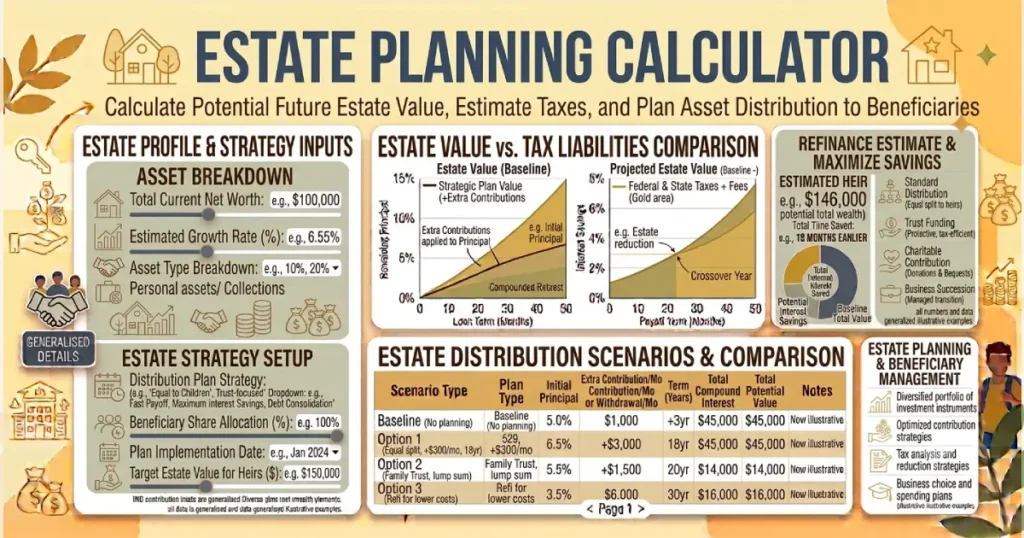
How an Estate Planning Calculator Works
An estate planning calculator estimates the value of everything you own, subtracts outstanding debts and certain expenses, and provides an overview of your projected estate.
Most calculators estimate:
- Net estate value
- Total assets
- Total liabilities
- Estimated inheritance available for beneficiaries
- Potential estate tax considerations
- Distribution scenarios among heirs
The results are estimates only. Estate planning laws, tax rules, and probate procedures vary depending on your circumstances and applicable laws.
What Information Do You Need?
| Input | Description |
|---|---|
| Real estate | Estimated market value of homes, land, and investment properties. |
| Bank accounts | Checking, savings, and money market balances. |
| Retirement accounts | 401(k), IRA, pension balances, and similar retirement assets. |
| Investment accounts | Stocks, bonds, mutual funds, ETFs, and brokerage accounts. |
| Business interests | Estimated ownership value of privately held businesses. |
| Personal property | Vehicles, jewelry, collectibles, and valuable household items. |
| Life insurance | Death benefit if applicable to your estate planning goals. |
| Outstanding debts | Mortgages, loans, credit cards, and other liabilities. |
Why Use an Estate Planning Calculator?
An estate planning calculator provides a clear snapshot of your financial situation, making it easier to organize assets and prepare for future decisions.
- Estimate your total estate value.
- Calculate your approximate net worth.
- Identify outstanding liabilities.
- Estimate the value available to beneficiaries.
- Evaluate potential estate tax exposure.
- Prepare for discussions with financial or legal professionals.
What Assets Should Be Included?
Your estate generally includes most property and financial assets that you own.
| Asset Category | Examples |
|---|---|
| Real estate | Primary residence, vacation home, rental property, land. |
| Cash | Checking, savings, certificates of deposit. |
| Investments | Stocks, bonds, mutual funds, ETFs. |
| Retirement savings | 401(k), IRA, pension accounts. |
| Business ownership | Private companies and partnership interests. |
| Personal property | Vehicles, artwork, jewelry, collectibles. |
Depending on your situation, additional assets such as intellectual property or trust interests may also be relevant.
Liabilities That Reduce Your Estate
An accurate estate estimate also considers the debts that may reduce the value ultimately available to heirs.
- Mortgage balances.
- Home equity loans.
- Personal loans.
- Auto loans.
- Credit card balances.
- Medical bills.
- Other outstanding obligations.
Subtracting liabilities from total assets provides an estimate of your net estate.
Understanding Estate Taxes
Estate tax calculator estimates can help illustrate how taxes may affect large estates, although actual tax liability depends on current federal and state laws, available exemptions, deductions, and individual circumstances.
Many estates are not subject to federal estate tax because of the applicable exemption amount, but state estate or inheritance taxes may apply in certain jurisdictions.
Because tax rules can change over time, calculator results should be viewed as planning estimates rather than final tax calculations.
Common Estate Planning Documents
| Document | Purpose |
|---|---|
| Will | Directs how assets should be distributed after death. |
| Living trust | May help manage assets and simplify transfers. |
| Financial power of attorney | Authorizes someone to manage financial matters. |
| Healthcare directive | Provides medical care instructions if you cannot make decisions. |
| Beneficiary designations | Direct assets held in certain financial accounts. |
These documents work together to create a more complete estate plan.
Factors That Affect Your Estate Value
Asset Growth
Investment performance and property appreciation may increase your estate over time.
Outstanding Debt
Loans and other liabilities reduce the value of your estate.
Lifetime Gifts
Transfers made during your lifetime may affect future estate planning depending on applicable tax rules.
Beneficiary Designations
Certain financial accounts pass according to beneficiary designations rather than through a will.
Business Ownership
Privately held businesses may require specialized valuation and succession planning.
Tips for Effective Estate Planning
- Review your estate plan after major life events.
- Keep beneficiary designations up to date.
- Maintain an inventory of important assets.
- Review insurance coverage periodically.
- Discuss your wishes with trusted family members when appropriate.
- Store estate planning documents securely.
Common Estate Planning Mistakes
- Not creating a will.
- Failing to update beneficiary designations.
- Ignoring newly acquired assets.
- Overlooking outstanding debts.
- Not reviewing documents after marriage, divorce, or the birth of a child.
- Assuming estate plans never need updates.
Estate Planning Calculator Example
Suppose your total assets include a home, retirement accounts, investment accounts, savings, and personal property with a combined value of $1,250,000. You also have a remaining mortgage and other debts totaling $180,000.
| Item | Example |
|---|---|
| Total assets | $1,250,000 |
| Total liabilities | $180,000 |
| Estimated net estate | $1,070,000 |
This estimate provides a starting point for understanding the overall value of your estate before considering taxes, administrative costs, or future changes in asset values.
Frequently Asked Questions
An estate planning calculator estimates your net estate by comparing your assets and liabilities. It can help organize financial information and estimate the value of assets available for beneficiaries.
An estate planning calculator totals the value of your assets, subtracts outstanding debts, and estimates your net estate for planning purposes.
Most people include real estate, bank accounts, retirement plans, investment accounts, business interests, vehicles, valuable personal property, and other significant assets.
Yes. Mortgages, personal loans, credit cards, and other liabilities reduce the net value of your estate and should be considered during planning.
Some calculators include estimates for potential estate taxes, but actual tax liability depends on current laws, exemptions, deductions, and individual circumstances.
A will provides instructions for distributing assets after death, while a trust can manage assets during your lifetime and after death according to its terms.
Many people review their estate plan after significant life events such as marriage, divorce, the birth of a child, retirement, or substantial changes in assets.
No. A calculator is designed to estimate financial information. Legal documents and estate planning strategies should be reviewed with qualified professionals when appropriate.
Understanding your net estate can help you organize your finances, estimate what may be available for beneficiaries, identify planning opportunities, and keep your estate plan aligned with your financial goals.