A salary calculator helps estimate your earnings by converting salary information into annual, monthly, biweekly, weekly, and hourly income amounts. Whether you are reviewing a job offer, planning a budget, or comparing compensation packages, a salary calculator provides a clearer picture of how much you earn before and after common deductions.
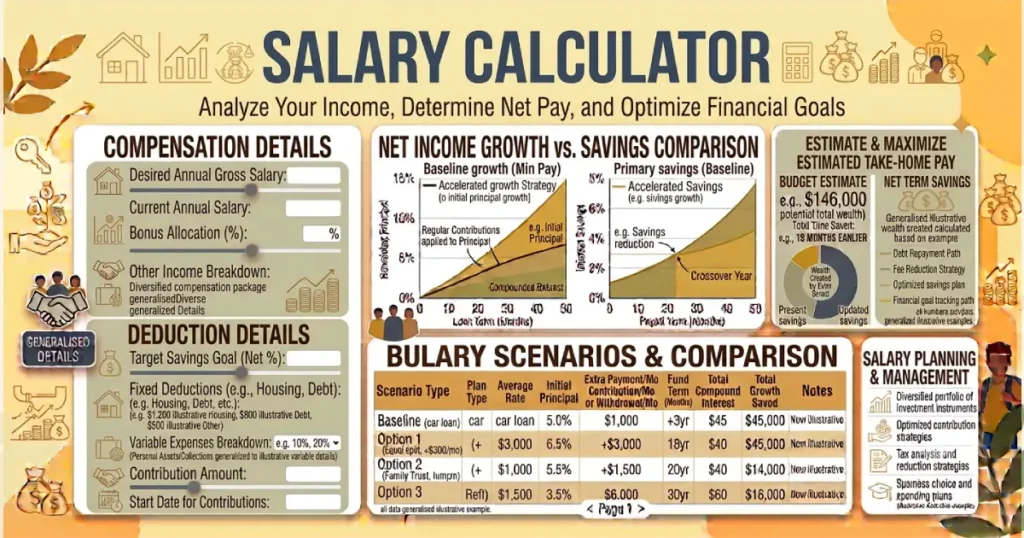
How a Salary Calculator Works
A salary calculator converts your gross income into different pay periods based on how frequently you are paid. It can also estimate your hourly equivalent based on your annual salary and working schedule.
The basic calculation depends on your pay frequency:
- Annual salary ÷ 12 = Monthly salary
- Annual salary ÷ 26 = Biweekly salary
- Annual salary ÷ 52 = Weekly salary
- Annual salary ÷ Total yearly working hours = Hourly rate
For a standard full-time schedule, many calculations assume 40 hours per week and 52 working weeks per year. Your actual earnings may differ based on overtime, bonuses, unpaid leave, and employer policies.
What Information Do You Need?
| Input | Description |
|---|---|
| Annual salary | Your total gross income before taxes and deductions. |
| Pay frequency | How often you receive your paycheck. |
| Hours worked per week | Used to estimate your hourly equivalent. |
| Weeks worked per year | Adjusts calculations for part-time or seasonal work. |
| Taxes and deductions | Used to estimate take-home pay. |
Salary Conversion Examples
The following examples show estimated gross income before taxes based on a full-time schedule.
| Annual Salary | Monthly Income | Weekly Income | Hourly Equivalent |
|---|---|---|---|
| $40,000 | $3,333 | $769 | $19.23/hour |
| $50,000 | $4,167 | $962 | $24.04/hour |
| $75,000 | $6,250 | $1,442 | $36.06/hour |
| $100,000 | $8,333 | $1,923 | $48.08/hour |
Gross Salary vs Take-Home Pay
Your annual salary is usually listed as gross income, which is the amount you earn before deductions. The amount deposited into your bank account is your net pay or take-home pay.
Common deductions include:
- Federal income taxes
- State and local taxes
- Social Security and Medicare taxes
- Health insurance premiums
- Retirement contributions
- Flexible spending account contributions
A salary calculator can estimate your gross earnings, but exact take-home pay depends on your tax situation, location, filing status, and benefits.
Annual Salary vs Hourly Pay
Salaried and hourly employees may have different compensation structures. A salaried employee typically receives a fixed amount each year, while an hourly employee is paid based on hours worked.
Important differences include:
- Hourly employees may qualify for overtime pay depending on their role.
- Salaried employees often have more predictable paychecks.
- Benefits and paid time off can affect the overall value of compensation.
- Work schedules may vary between employers.
Factors That Affect Your Actual Income
Bonuses and Commissions
Many employees receive additional compensation beyond base salary. Bonuses, commissions, and performance incentives can increase total annual earnings.
Benefits
A job’s value is not determined only by salary. Health insurance, retirement matching, paid vacation, and other benefits can add thousands of dollars to total compensation.
Overtime
Employees who receive overtime pay may earn more than their base salary calculation suggests.
Location
Taxes, cost of living, and salary expectations vary by state and region. The same salary may provide a different standard of living depending on where you live.
Why Use a Salary Calculator?
- Compare job offers with different salary structures.
- Estimate monthly income for budgeting.
- Convert annual salary into hourly value.
- Understand the impact of raises.
- Plan savings and financial goals.
- Compare employee compensation packages.
Common Salary Calculation Mistakes
- Confusing gross income with take-home pay.
- Ignoring benefits when comparing job offers.
- Using annual salary without considering unpaid time off.
- Forgetting bonuses or commissions.
- Assuming hourly and salaried compensation are always equal.
Frequently Asked Questions
A salary calculator converts annual income into different pay periods, including monthly, weekly, and hourly amounts. It uses your salary, pay schedule, and working hours to estimate your earnings before taxes and deductions.
Divide your annual salary by 12 to estimate your monthly gross income. For example, a $60,000 annual salary equals approximately $5,000 per month before taxes and other deductions.
A $50,000 annual salary equals about $4,167 per month before taxes. Your actual paycheck will be lower after federal taxes, state taxes, insurance costs, retirement contributions, and other deductions.
Some calculators can provide an estimate of take-home pay by including tax assumptions and deductions. However, the final amount depends on your personal tax situation, location, benefits, and withholding choices.
To estimate an hourly rate, divide your annual salary by the number of hours you work each year. A common calculation uses 2,080 working hours based on 40 hours per week for 52 weeks.
Base salary usually refers only to fixed pay. Bonuses, commissions, retirement contributions, health benefits, and other employer perks are separate components of total compensation.
Salary usually refers to a fixed annual amount, while wages often refer to hourly compensation based on time worked. The differences can affect overtime eligibility, pay schedules, and benefits.
Yes. A salary calculator can help you compare offers, understand your potential income, and evaluate whether compensation aligns with your financial goals and living expenses.