A take home pay calculator helps estimate how much money you will actually receive in your paycheck after taxes and other deductions are removed. Your gross salary or hourly wage does not represent the amount deposited into your bank account. Federal taxes, state taxes, Social Security, Medicare, retirement contributions, health insurance, and other deductions can significantly affect your final paycheck.
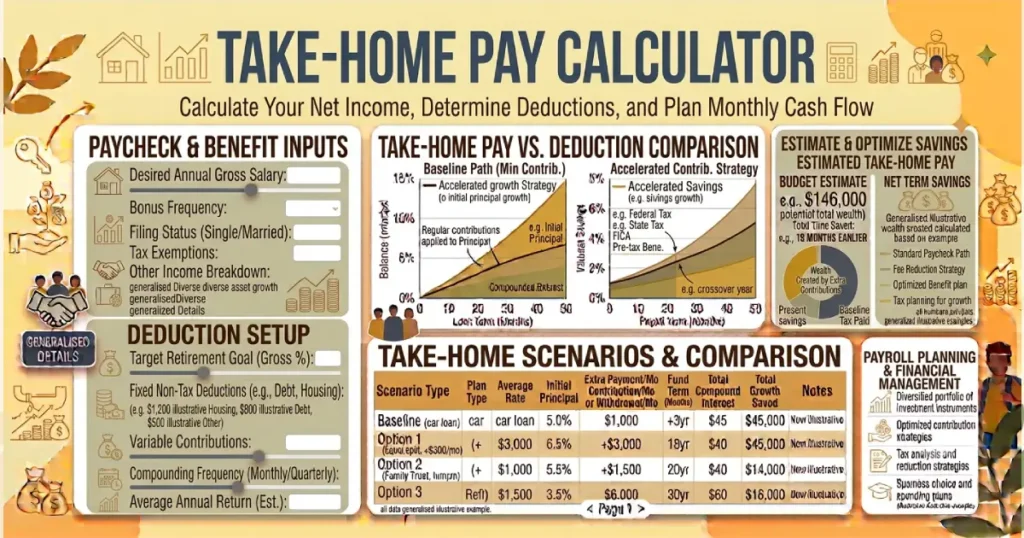
How a Take Home Pay Calculator Works
A take-home pay calculator starts with your gross income and subtracts estimated deductions to calculate your net pay. Net pay is the amount you keep after required taxes and optional deductions are removed.
The basic formula is:
Gross Pay − Taxes − Payroll Deductions = Take Home Pay
To create an accurate estimate, calculators typically consider:
- Annual salary or hourly wage
- Pay frequency
- Federal income tax withholding
- State and local taxes
- Social Security and Medicare taxes
- Retirement contributions
- Health insurance premiums
Your actual paycheck may differ because employers calculate withholding based on your W-4 information, benefits elections, and current tax rules.
What Information Do You Need?
| Information | Why It Matters |
|---|---|
| Gross income | Your earnings before taxes and deductions. |
| Pay frequency | Determines whether you are paid weekly, biweekly, semi-monthly, or monthly. |
| Filing status | Affects federal income tax calculations. |
| State of residence | State taxes vary depending on location. |
| Pre-tax deductions | Includes retirement plans and certain benefits. |
| Post-tax deductions | Includes deductions taken after taxes are calculated. |
Gross Pay vs Take Home Pay
Gross pay is your total earnings before any deductions. Take-home pay, also called net pay, is the amount you receive after deductions are applied.
For example, someone earning a $75,000 annual salary does not receive $75,000 directly. Their paycheck is reduced by federal taxes, Social Security, Medicare, possible state taxes, and benefits.
The difference between gross income and net income depends on personal factors such as:
- Tax filing status
- Number of dependents
- Retirement contributions
- Insurance costs
- State and local tax rules
Common Deductions That Reduce Your Paycheck
Federal Income Tax
Federal income tax is calculated based on your taxable income and tax bracket. Your employer withholds estimated taxes from each paycheck based on your W-4 form.
Social Security Tax
Most employees pay Social Security taxes through payroll withholding. These taxes help fund Social Security benefits.
Medicare Tax
Medicare taxes are also automatically withheld from employee paychecks and help fund the Medicare program.
State and Local Taxes
State income taxes vary widely. Some states have no income tax, while others apply different tax rates depending on income levels.
Retirement Contributions
Contributions to workplace retirement plans, such as a 401(k), can reduce your taxable income when they are made on a pre-tax basis.
Health Insurance and Benefits
Employer-sponsored insurance premiums and other benefits may reduce your paycheck depending on your elections.
Why Use a Take Home Pay Calculator?
Understanding your actual income helps you make better financial decisions.
- Create a realistic monthly budget.
- Compare job offers based on actual income.
- Estimate the impact of a raise.
- Plan savings goals.
- Understand how benefits affect your paycheck.
- Determine how much housing or other expenses you can afford.
Factors That Affect Your Net Pay
Salary or Hourly Wage
A higher gross income usually results in higher take-home pay, but the amount depends on your tax situation and deductions.
Pay Schedule
The same annual salary can produce different paycheck amounts depending on whether you are paid weekly, biweekly, or monthly.
Tax Withholding
Your W-4 selections influence how much federal income tax is withheld from each paycheck.
Retirement Savings
Increasing retirement contributions can reduce your current paycheck while helping you save for future goals.
Location
Your state and local tax obligations can create differences in take-home pay between locations with the same salary.
How to Increase Your Take Home Pay
There are several ways employees may increase the amount they keep from each paycheck:
- Review your tax withholding after major life changes.
- Take advantage of available employer benefits.
- Compare insurance options during open enrollment.
- Adjust retirement contributions based on your financial goals.
- Look for tax-advantaged accounts when available.
Changes should be made carefully because reducing withholding too much may result in a tax bill later.
Common Mistakes When Estimating Take Home Pay
- Using gross salary as monthly spending money.
- Ignoring state and local taxes.
- Forgetting benefit deductions.
- Assuming every employee has the same tax rate.
- Not updating withholding after major financial changes.
Frequently Asked Questions
A take home pay calculator provides an estimate based on the information entered. The final paycheck amount may differ because employers use your actual tax forms, benefit elections, and payroll calculations.
To estimate take-home pay, subtract taxes and deductions from your gross income. Include federal taxes, state taxes, Social Security, Medicare, retirement contributions, insurance premiums, and other paycheck deductions.
Yes. Most calculators estimate common payroll taxes, including federal income tax, Social Security, and Medicare. Some also include state and local taxes depending on your location.
Gross pay is your total income before deductions. Net pay, or take-home pay, is the amount remaining after taxes and other deductions have been removed from your paycheck.
The take-home amount depends on your state, tax filing status, benefits, and deductions. A calculator can provide an estimate by applying typical tax and payroll assumptions to your salary.
Yes. Hourly employees can enter their hourly rate, average weekly hours, and pay schedule to estimate gross and net income after deductions.
Your monthly paycheck is lower because your gross salary does not include deductions. Taxes, insurance premiums, retirement contributions, and other expenses reduce the amount you receive.
Changing your W-4 may change the amount withheld from each paycheck. However, it does not reduce your actual tax obligation. Adjustments should reflect your expected tax situation.