A savings calculator helps estimate how much money you can accumulate over time based on your starting balance, regular deposits, interest rate, and savings timeline. Whether you are building an emergency fund, saving for a major purchase, or planning a financial goal, a savings calculator shows how consistent contributions and interest growth can affect your future balance.
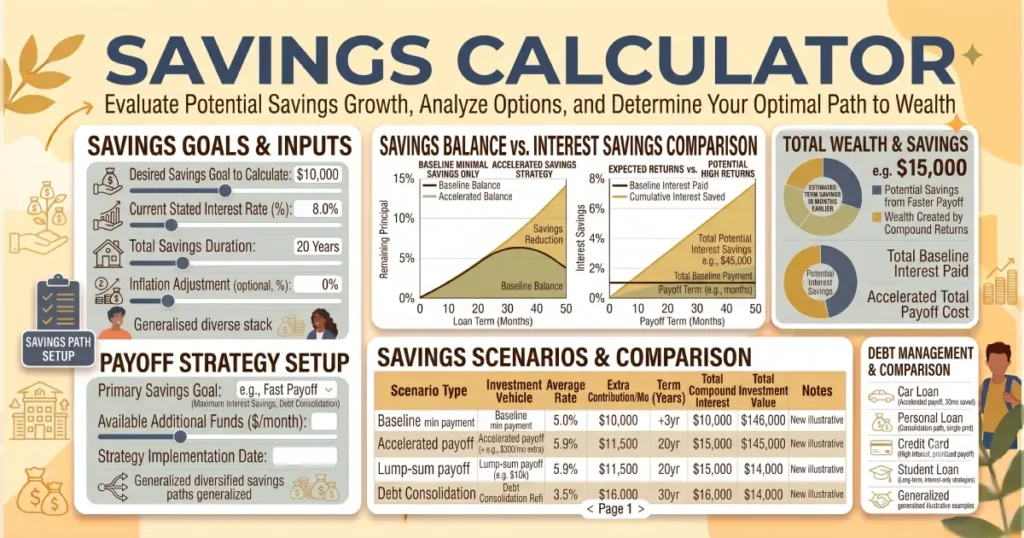
How a Savings Calculator Works
A savings calculator projects the future value of your savings by combining your initial deposit, additional contributions, and the interest earned over time.
The calculation usually considers:
- Starting savings amount
- Monthly or annual deposits
- Annual interest rate
- Length of saving period
- Interest compounding frequency
The calculator provides an estimate of your potential savings balance. Actual results may differ depending on interest rate changes, account fees, taxes, and financial institution policies.
What Information Do You Need?
| Input | Description |
|---|---|
| Initial deposit | The amount you already have saved. |
| Monthly contribution | The amount you plan to add regularly. |
| Interest rate | The annual percentage earned on your savings. |
| Savings period | How long you plan to keep saving. |
| Compounding frequency | How often earned interest is added to your account. |
Why Use a Savings Calculator?
A savings calculator helps turn financial goals into measurable plans. Instead of guessing how long it may take to reach a target amount, you can estimate the monthly savings needed and understand how interest contributes to growth.
Common reasons to use a savings calculator include:
- Planning an emergency fund.
- Saving for a home down payment.
- Preparing for education expenses.
- Building vacation or travel savings.
- Comparing different savings strategies.
- Setting realistic financial goals.
How Compound Interest Helps Savings Grow
Many savings accounts earn compound interest, meaning earned interest is added to your account balance and can generate additional interest in the future.
Over short periods, deposits usually have the biggest impact on growth. Over longer periods, compound interest can become a more important factor because your savings have more time to generate earnings.
The main factors that influence savings growth are:
- The amount you save regularly.
- The interest rate offered by the account.
- The length of time money remains deposited.
- The frequency of interest compounding.
Types of Savings Goals
Emergency Fund
An emergency fund provides money for unexpected expenses such as medical bills, car repairs, or temporary income loss. Many financial experts recommend keeping several months of essential expenses available.
Short-Term Goals
Savings accounts are commonly used for goals that are a few months or years away, such as vacations, major purchases, or upcoming expenses.
Long-Term Goals
For longer-term goals, some people consider investment options because they may offer higher growth potential, although they also involve more risk.
Savings Account vs Investment Account
| Feature | Savings Account | Investment Account |
|---|---|---|
| Risk | Generally lower | Usually higher |
| Growth potential | Usually predictable | Can vary based on market performance |
| Common uses | Emergency funds and short-term goals | Long-term wealth building |
| Access to money | Usually easy access | Depends on investment type |
Factors That Affect Savings Growth
Interest Rate
A higher interest rate can increase your savings growth, especially when money remains in the account for many years.
Regular Contributions
Consistent deposits often have the largest impact on reaching savings goals. Small monthly contributions can add up significantly over time.
Time
The longer you save, the more opportunity your deposits and interest earnings have to grow.
Inflation
Inflation reduces purchasing power over time. A savings plan should consider whether your money is growing faster than prices increase.
Fees and Taxes
Account fees and taxes on interest earnings can reduce the final amount available.
Common Savings Mistakes
- Saving without a specific goal.
- Ignoring interest rates and account fees.
- Not automating regular contributions.
- Keeping long-term savings in accounts with low growth potential.
- Underestimating future expenses.
How to Reach Your Savings Goal Faster
- Set a specific target amount and deadline.
- Automate transfers from your checking account.
- Increase contributions when your income rises.
- Reduce unnecessary expenses.
- Choose an account that offers competitive interest rates.
A savings calculator allows you to test different scenarios and see how increasing deposits or extending your timeline may affect your results.
Frequently Asked Questions
A savings calculator estimates how much money you may accumulate over time based on your initial deposit, regular contributions, interest rate, and savings period.
A savings calculator combines your starting balance, deposits, interest rate, and time period to estimate future savings growth. It uses these inputs to project how your account balance may increase.
The right monthly savings amount depends on your income, expenses, goals, and timeline. A calculator can help determine how much you need to save to reach a specific target.
Yes. Most savings calculators include an interest rate assumption to estimate how your money may grow through earned interest and compounding.
Savings calculators provide estimates based on the information entered. Actual results may differ if interest rates change, fees apply, or your deposits vary from the plan.
Yes. A savings calculator can help estimate how long it may take to build an emergency fund based on your current savings and planned monthly contributions.
Savings generally focuses on protecting money with lower risk, while investing aims for greater growth potential but involves market risk. The right choice depends on your goals and timeline.
You can increase savings speed by contributing more regularly, reducing expenses, earning higher interest, and setting automatic transfers to make saving consistent.