A compound interest calculator helps estimate how your money can grow over time when your earnings are added back to your balance and generate additional returns. This powerful financial concept plays an important role in investing, saving, and long-term wealth building because even small contributions can grow significantly over many years.
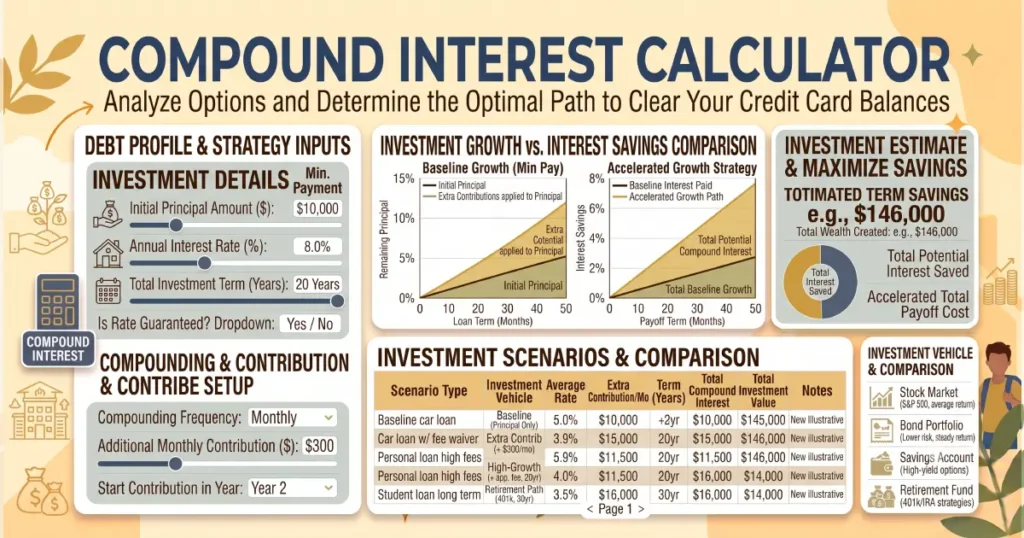
How a Compound Interest Calculator Works
A compound interest calculator estimates future growth by considering your initial deposit, interest rate, investment period, additional contributions, and how often interest is compounded.
Unlike simple interest, where returns are calculated only on the original amount, compound interest allows previous earnings to become part of the balance used for future calculations.
The main factors affecting compound growth are:
- Initial investment amount
- Additional deposits
- Annual interest rate or investment return
- Length of time money remains invested
- Compounding frequency
The calculator provides an estimate of potential growth. Actual results may vary depending on market performance, interest rate changes, taxes, fees, and account type.::contentReference[oaicite:0]{index=0}
What Information Do You Need?
| Input | Description |
|---|---|
| Initial amount | The money you invest or deposit at the beginning. |
| Interest rate | The annual percentage rate earned on your money. |
| Compounding frequency | How often interest is added to your balance. |
| Investment period | The number of years your money remains invested. |
| Additional contributions | Extra deposits made monthly or annually. |
Compound Interest vs Simple Interest
The main difference between compound and simple interest is how earnings are calculated.
| Feature | Compound Interest | Simple Interest |
|---|---|---|
| Calculation basis | Original amount plus accumulated interest | Original amount only |
| Growth potential | Can accelerate over time | Grows at a fixed rate |
| Common uses | Savings accounts, investments, retirement accounts | Certain loans and basic interest calculations |
Why Compound Interest Matters
Compound interest rewards time and consistency. The longer money remains invested, the more opportunities earnings have to generate additional earnings.
This is why starting early can be valuable. A person who begins investing sooner may accumulate significant growth even with smaller regular contributions compared with someone who starts later and invests larger amounts.
Compound growth is commonly used in:
- Retirement accounts
- Investment portfolios
- Savings accounts
- Certificates of deposit
- Long-term financial planning
Example of Compound Interest Growth
Suppose you invest $10,000 with an annual return of 7% and leave it invested for 30 years without adding more money. Because returns compound over time, the final balance can become much larger than the original investment.
| Example | Value |
|---|---|
| Initial investment | $10,000 |
| Annual return | 7% |
| Investment period | 30 years |
| Additional contributions | $0 |
This example shows why time is one of the most important factors in long-term investing.
Factors That Affect Compound Growth
Time
The number of years your money remains invested has a major impact. Longer periods allow more compounding cycles and greater potential growth.
Interest Rate or Investment Return
A higher rate can increase future growth, but investments with higher potential returns often involve greater risk.
Compounding Frequency
Interest may compound annually, quarterly, monthly, or daily. More frequent compounding can slightly increase growth over time.
Regular Contributions
Adding money consistently can significantly increase your final balance because each contribution has the opportunity to grow.
Fees and Taxes
Investment fees and taxes can reduce your actual returns. Including these costs creates a more realistic financial projection.
How to Use Compound Interest for Financial Goals
A compound interest calculator can help you plan for different financial objectives, including retirement, education expenses, emergency savings, or long-term investing.
You can test different scenarios by changing:
- Monthly contribution amounts
- Expected annual return
- Investment timeline
- Starting balance
These comparisons can show how small changes in saving habits may affect future results.
Common Compound Interest Mistakes
- Assuming investment returns are guaranteed.
- Ignoring inflation when estimating future purchasing power.
- Starting too late and losing valuable compounding time.
- Ignoring fees that reduce long-term growth.
- Focusing only on short-term market changes.
Compound Interest and Retirement Planning
Compound interest is one of the main reasons retirement savings can grow substantially over decades. Contributions made to accounts such as 401(k) plans and IRAs may benefit from years of investment growth.
Using a calculator can help estimate how much you may need to save regularly to reach a future retirement goal.
Frequently Asked Questions
A compound interest calculator estimates how much money may grow over time when interest or investment returns are added back to the balance and generate additional earnings.
Compound interest works by allowing earned interest to become part of the account balance. Future interest calculations are then based on the larger amount, which can accelerate growth over time.
Simple interest is calculated only on the original principal amount, while compound interest is calculated on the principal plus previously earned interest. This allows compound interest to produce faster growth over long periods.
Interest can compound at different intervals, including annually, quarterly, monthly, or daily. More frequent compounding may slightly increase returns, especially over longer investment periods.
Yes. Compound interest can increase growth because your earnings generate additional earnings. The effect becomes stronger when money remains invested for many years.
Many calculators allow you to add regular contributions. Including monthly deposits provides a more realistic estimate for savings and investment plans.
No. Calculations are based on assumptions about interest rates or investment returns. Actual results may differ because rates, markets, fees, and taxes can change.
You can benefit by starting early, contributing consistently, keeping money invested for longer periods, and choosing accounts or investments that match your financial goals and risk tolerance.