A student loan calculator helps borrowers estimate their monthly payments, total interest costs, and repayment timeline before or after taking out education loans. By entering your loan balance, interest rate, repayment term, and additional payments, you can understand how much your student loans may cost over time and create a more realistic repayment strategy.
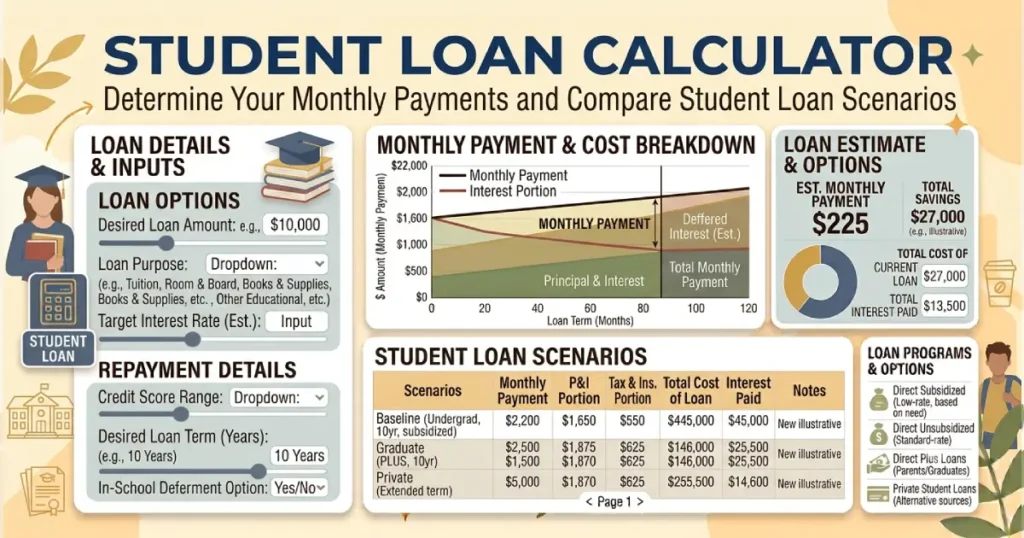
How a Student Loan Calculator Works
A student loan calculator estimates your repayment costs based on the amount you owe, your interest rate, and the repayment period. Most student loans are repaid through monthly payments that include both principal and interest.
The calculator typically helps estimate:
- Student loan monthly payment
- Total interest paid over the life of the loan
- Estimated loan payoff date
- Impact of making extra payments
- How different repayment terms affect costs
The calculation depends on several factors, including whether the loan is federal or private, the interest rate, repayment plan, and outstanding balance.
Your actual payment may differ because lenders and federal loan servicers use specific repayment rules, interest calculations, and eligibility requirements.
What Information Do You Need?
| Input | Description |
|---|---|
| Student loan balance | The total amount you currently owe. |
| Interest rate | The annual cost charged on your outstanding loan balance. |
| Repayment term | The number of years you plan to take to repay the loan. |
| Monthly payment | The amount you expect to pay each month. |
| Extra payments | Additional money paid toward the loan principal. |
How Student Loan Payments Are Calculated
Most student loan payments are calculated using the loan balance, interest rate, and repayment period. Each monthly payment is divided between interest charges and reducing the principal balance.
For example, if you have a larger loan balance or higher interest rate, your monthly payment will generally be higher. Choosing a longer repayment period can reduce the monthly payment but usually increases the total interest paid.
| Repayment Term | Monthly Payment | Total Interest Cost |
|---|---|---|
| Shorter repayment period | Higher monthly payment | Lower total interest |
| Longer repayment period | Lower monthly payment | Higher total interest |
Understanding Student Loan Interest
Student loan interest is the cost of borrowing money for education. Interest typically accrues based on your outstanding principal balance and the loan's interest rate.
The main factors affecting your total interest cost include:
- Original loan amount
- Interest rate
- Repayment length
- Payment amount
- Additional payments
Making extra payments can reduce the principal balance faster, which may lower the amount of interest charged over time.
Federal Student Loans vs Private Student Loans
| Feature | Federal Student Loans | Private Student Loans |
|---|---|---|
| Lender | Federal government | Private banks, credit unions, or lenders |
| Interest rates | Generally fixed rates set by federal rules | May vary by lender and borrower credit profile |
| Repayment options | Multiple federal repayment plans may be available | Options depend on lender terms |
| Income-based options | Some plans may adjust payments based on income | Usually limited |
The type of student loan you have can significantly affect your repayment options and monthly costs.
Common Student Loan Repayment Plans
Federal student loans may offer different repayment options designed for different financial situations. The right plan depends on your income, loan balance, family size, and long-term goals.
- Standard repayment plan – Fixed monthly payments with a typical 10-year repayment period.
- Graduated repayment plan – Payments start lower and increase over time.
- Income-driven repayment plans – Payments may be based on income and family size.
- Extended repayment plan – Allows a longer repayment period, which may lower monthly payments.
A student loan repayment calculator can help compare how different repayment periods affect your total cost.
Why Use a Student Loan Calculator?
Understanding your repayment obligations before borrowing or making repayment decisions can help you manage your finances more effectively.
- Estimate your monthly student loan payment.
- Understand total interest costs.
- Compare different repayment strategies.
- See the effect of making extra payments.
- Plan your monthly budget after graduation.
- Estimate how long it will take to become debt-free.
How to Pay Off Student Loans Faster
Many borrowers look for ways to reduce the time it takes to repay student debt. While repayment strategies depend on your financial situation, several approaches may help lower total interest costs.
- Pay more than the required monthly amount when possible.
- Apply extra payments toward the principal balance if allowed.
- Refinance only after considering the benefits and risks.
- Choose a repayment plan that fits your income.
- Avoid missing payments to protect your credit history.
A student loan payoff calculator can show how additional payments may shorten your repayment timeline.
Factors That Affect Your Student Loan Cost
Loan Balance
The amount borrowed directly affects your monthly payment and total interest charges. Larger balances generally require more time and money to repay.
Interest Rate
A higher interest rate increases borrowing costs because more money goes toward interest over the repayment period.
Repayment Length
A longer repayment term can make payments more affordable each month but usually results in paying more interest overall.
Payment Strategy
Paying extra toward your loans can reduce your principal balance faster and may decrease total interest costs.
Loan Type
Federal and private student loans have different repayment rules, benefits, and borrower protections.
Student Loan Amortization Explained
A student loan amortization calculator shows how each payment is applied throughout the repayment period. Early payments often include more interest because the loan balance is higher. As the balance decreases, a larger portion of each payment goes toward reducing the principal.
Understanding amortization helps borrowers see why additional payments early in repayment can have a greater impact on total interest savings.
Common Student Loan Mistakes
- Ignoring the total interest cost.
- Choosing a repayment term without considering long-term expenses.
- Borrowing more than necessary.
- Missing payments or delaying repayment without understanding consequences.
- Not reviewing available repayment options.
Frequently Asked Questions
A student loan calculator estimates monthly payments and total repayment costs using your loan balance, interest rate, repayment term, and additional payment information. It helps borrowers understand the financial impact of their student debt.
Your student loan payment depends on your total balance, interest rate, repayment term, and loan type. Entering these details into a calculator can provide an estimate of your expected monthly payment.
To calculate your monthly payment, you need your loan amount, interest rate, and repayment period. A student loan calculator applies these details to estimate the amount required each month.
The time required to repay student loans depends on your balance, interest rate, repayment plan, and payment amount. Making extra payments can reduce the repayment period.
Yes. Most student loan calculators include interest calculations to estimate both your monthly payment and the total amount you may pay over the life of the loan.
Yes. Many calculators allow you to add extra payments and compare how additional contributions may reduce your payoff timeline and total interest costs.
A good repayment strategy depends on your income, expenses, loan type, and financial goals. Some borrowers prioritize faster repayment, while others choose lower payments through available repayment plans.
Refinancing may lower payments for some borrowers by changing the interest rate or repayment term. However, refinancing federal loans into private loans may result in losing certain federal benefits and protections.
Federal student loans are issued under government programs and may offer specific repayment options and protections. Private student loans come from private lenders and follow the lender's terms.