An emergency fund calculator helps you estimate how much money you should set aside for unexpected expenses, income interruptions, or financial emergencies. By entering your monthly essential expenses, current savings, and savings goal, you can estimate the size of your emergency fund and how long it may take to reach it.
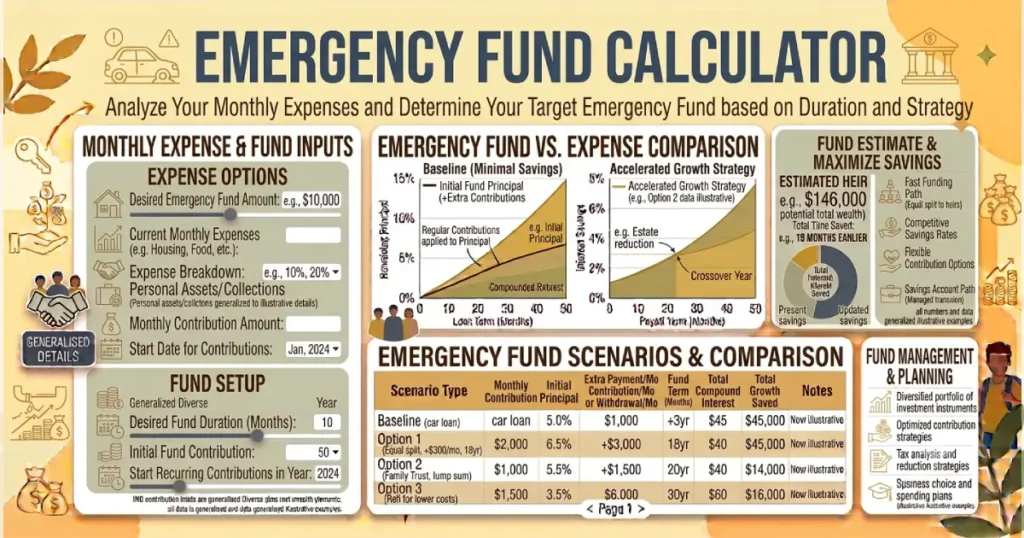
How an Emergency Fund Calculator Works
An emergency fund calculator estimates the amount of savings needed to cover your essential living expenses for a selected number of months if your income is reduced or stops unexpectedly.
Most calculators estimate:
- Emergency fund goal
- Recommended savings amount
- Monthly savings target
- Estimated time to reach your goal
- Savings shortfall or surplus
The calculation is based on your recurring monthly expenses rather than your income, since those expenses determine how much cash you would need during an emergency.
What Information Do You Need?
| Input | Description |
|---|---|
| Monthly essential expenses | Housing, utilities, groceries, insurance, transportation, and minimum debt payments. |
| Current emergency savings | The amount already reserved for emergencies. |
| Monthly savings contribution | The amount you plan to add to your emergency fund each month. |
| Target coverage period | The number of months of expenses you want your emergency fund to cover. |
Why Use an Emergency Fund Calculator?
An emergency fund serves as a financial cushion when unexpected events occur, such as job loss, medical expenses, major car repairs, or urgent home maintenance. A calculator helps you determine whether your current savings are enough to handle those situations.
- Estimate how much emergency savings you need.
- Set realistic savings goals.
- Track progress over time.
- Prepare for unexpected financial setbacks.
- Reduce reliance on credit cards or loans during emergencies.
- Build long-term financial stability.
How Much Should You Have in an Emergency Fund?
The ideal emergency fund depends on your financial situation, employment stability, household size, and monthly expenses. Many financial professionals suggest saving enough to cover several months of essential living expenses.
| Situation | Typical Savings Goal |
|---|---|
| Stable income | 3 to 6 months of essential expenses |
| Variable income or self-employed | 6 to 12 months of essential expenses |
| Single-income household | Often closer to 6 months or more |
| Dual-income household | May require a smaller cushion depending on financial stability |
Your target should reflect your personal financial circumstances rather than a single universal rule.
What Expenses Should Be Included?
Your emergency fund should focus on essential monthly expenses that would continue if your income stopped.
- Mortgage or rent
- Utilities
- Groceries
- Insurance premiums
- Transportation costs
- Minimum loan payments
- Healthcare expenses
- Basic household necessities
Discretionary spending such as vacations, entertainment, and luxury purchases is generally not included when calculating emergency savings needs.
Where Should You Keep an Emergency Fund?
Your emergency savings should be easily accessible while remaining separate from your everyday spending account.
| Account Type | Potential Benefits |
|---|---|
| High-yield savings account | Competitive interest and easy access to funds. |
| Money market account | May provide higher yields with convenient withdrawals. |
| Cash management account | Combines savings features with spending flexibility. |
| Short-term certificate of deposit | May offer higher returns if immediate access is not required. |
Since emergencies are unpredictable, liquidity is usually more important than maximizing investment returns.
Factors That Affect Your Emergency Savings Goal
Monthly Living Expenses
Higher recurring expenses generally require a larger emergency fund.
Job Stability
Workers with stable employment may require a smaller reserve than those with seasonal or unpredictable income.
Household Size
Larger households often have greater monthly expenses and may benefit from a larger financial cushion.
Existing Insurance Coverage
Health, disability, homeowners, renters, and auto insurance may reduce certain financial risks but do not eliminate the need for emergency savings.
Other Financial Assets
Available cash, taxable investments, and other liquid assets may influence how much emergency savings you decide to maintain.
How to Build an Emergency Fund Faster
- Set up automatic monthly transfers.
- Save part of tax refunds or bonuses.
- Reduce discretionary spending temporarily.
- Deposit unexpected income directly into savings.
- Increase contributions as your income grows.
- Keep emergency savings separate from daily spending accounts.
An emergency savings calculator allows you to test different monthly contribution amounts and estimate how quickly you may reach your goal.
Common Emergency Fund Mistakes
- Saving based on income instead of essential expenses.
- Keeping emergency money in risky investments.
- Using emergency savings for non-emergency purchases.
- Ignoring inflation and rising living costs.
- Stopping contributions after reaching an initial goal.
- Keeping all savings in an account that is difficult to access quickly.
Emergency Fund Calculator Example
Suppose your household spends $3,800 each month on essential living expenses and your goal is to build six months of financial protection.
| Item | Example |
|---|---|
| Monthly essential expenses | $3,800 |
| Target coverage | 6 months |
| Emergency fund goal | $22,800 |
| Current savings | $8,000 |
The calculator can estimate how long it may take to reach your goal based on your planned monthly contributions.
Frequently Asked Questions
An emergency fund calculator estimates how much money you may need to cover essential living expenses during unexpected financial situations such as job loss, illness, or major repairs.
The right amount depends on your monthly expenses, job stability, household size, and financial responsibilities. Many people aim to save several months of essential living expenses.
An emergency fund calculator multiplies your monthly essential expenses by your desired coverage period and compares that amount with your existing savings.
Include housing, utilities, groceries, insurance, transportation, healthcare, and minimum debt payments. Optional spending is generally excluded.
An emergency fund calculator multiplies your monthly essential expenses by your desired coverage period and compares that amount with your existing savings.
Include housing, utilities, groceries, insurance, transportation, healthcare, and minimum debt payments. Optional spending is generally excluded.
Many people keep emergency savings in a high-yield savings account or another liquid account that provides quick access while earning interest.
The timeline depends on your savings goal, current balance, and monthly contributions. Increasing your monthly deposits can shorten the time required.
Emergency savings are generally intended to remain accessible and stable. Investing them in assets that fluctuate significantly may reduce availability when the money is needed.
Many people begin with a modest emergency fund while continuing required debt payments, then expand their savings as high-interest debt is reduced. The right balance depends on your financial situation.
Yes. It estimates a target based on your monthly expenses and allows you to adjust contributions to see how different savings strategies affect your progress.